Hiring
Can I afford to hire?
The wage is the easy part. Before you hire, check 4 things: the cash to carry them until they are up to speed, which profit line takes the cost, the oncosts on top of the wage, and the time the hire frees up.
1. Count the full cost
A new person costs more than their wage. The extra costs are called oncosts. Super (the Super Guarantee) comes on top, at 12% of their earnings. So do workers compensation, a desk or a vehicle, software licences, and payroll tax once your payroll passes your state’s threshold.
Leave costs too. The wage keeps being paid through annual leave, sick leave and public holidays. Many awards add a 17.5% loading to annual leave. Long service leave builds up over time. For a direct role, about 46 working weeks have to earn back 52 weeks of pay.
- Wage
- $80,000
- Super at 12%
- $9,600
- Other oncosts (an example figure)
- $6,400
Full cost: $96,000 a year, or $8,000 a month.
Your own oncosts will differ. Ask your bookkeeper or accountant for the real figure before you use it.
2. Can the bank carry them until they are up to speed?
A new person costs the full amount from their first week. What they bring back arrives later, once they know the work and your customers.
Decide how long that takes in your business. This example uses 3 months. Use your own.
- Full cost per month
- $8,000
- Months until they pay their way (your estimate)
- 3
Cash needed before the hire pays its way: $24,000, plus any recruitment costs.
Check that amount against the cash you hold after your other commitments. Recruitment fees and equipment usually land in the first month too. If paying it would leave you thin on cash, plan the start date around a strong cash month, or start them part-time.
3. Direct or indirect: which profit takes the hit?
Direct team members do the work customers pay for, such as a technician or a consultant on billable work. Their cost sits in Cost of Sales, so it comes off Gross Profit (Sales less Cost of Sales). The work they produce has to pay for them, plus materials, plus a margin.
- Gross Profit today on $1,500,000 of sales, at 40%
- $600,000
- A direct hire added to Cost of Sales
- $96,000
- Gross Profit before their work is sold
- $504,000
Gross Profit % falls from 40% to 33.6% until their work brings in new sales.
Indirect team members keep the business running, such as admin or management. Their cost is an overhead, so it comes off Operating Profit (what is left after overheads as well). The business has to make enough extra Gross Profit to cover them.
- Full cost of an indirect hire
- $96,000
- Your Gross Profit %
- 40%
Extra sales needed just to cover them ($96,000 ÷ 40%): $240,000 a year.
That is the break-even, assuming the extra sales earn today’s Gross Profit %. The hire is worth it when the extra sales, or the costs it saves, go well past it.
4. What does it free up?
A hire also buys time. Yours, or someone else’s who is doing work below their pay level. Ask whose hours it frees, and what those hours will go into.
- Your hours freed from admin each week
- 8
- Extra jobs won from that time in quoting and follow-up
- 1 a month
- Gross Profit on a $10,000 job at 40%
- $4,000
Gross Profit from the freed time: $48,000 a year.
In this example the freed time covers half the hire’s cost. The rest has to come from their own work or other savings.
It only counts if the time goes there. Decide before they start what you, or the person they relieve, will stop doing and start doing instead.
Put it together
- Is the full cost in, oncosts and leave included?
- Can the bank carry them until they are up to speed?
- Which profit takes the cost, and is there enough Gross Profit to cover it?
- What does it free up, and who will use that time?
If the answers stack up, hire. If one does not, fix that first, or start smaller.
How Focus on Cash shows it
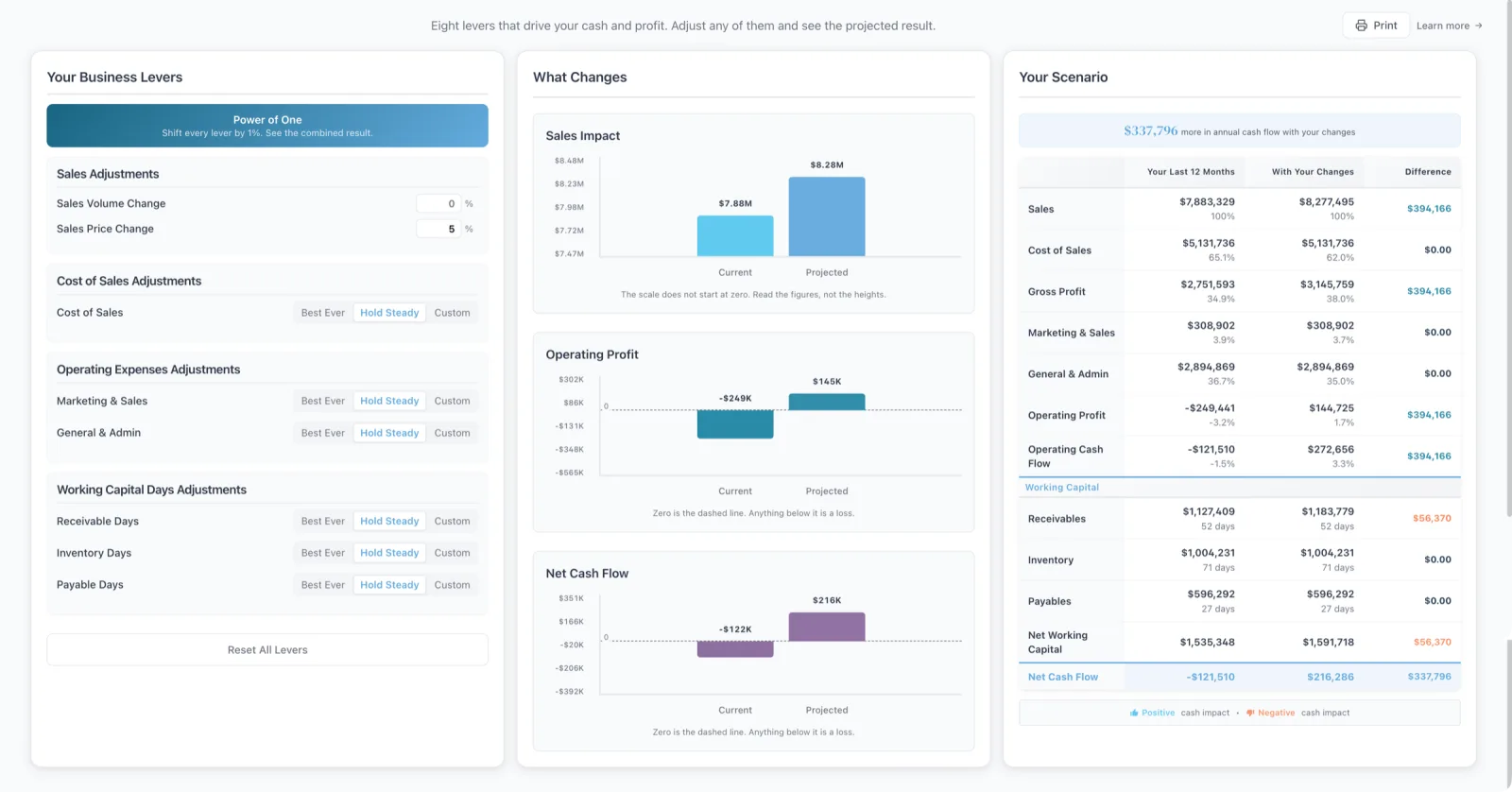
The What If screen tests the hire before you commit. Choose Custom on the line the hire belongs to: Cost of Sales for a direct hire, General & Admin or Marketing & Sales for an indirect one. Type the new share of sales: today’s dollars on that line plus the hire’s full cost, divided by the sales you expect after the hire. Set the extra sales with Sales Volume Change. Then see what happens to Operating Profit and Net Cash Flow.
It shows a full year once they are up to speed. Do the cash sum for the first months yourself, and check it against the Overview. Its headline is built from how many weeks of running costs your bank holds. The app calls under 13 weeks thin. A hire raises those running costs.
After you hire, Focus on Cash watches payroll using the accounts you ticked as payroll during setup.
- Team costs ahead of sales is flagged on the Profits screen when payroll is rising and sales are not.
- Getting Less From Your Payroll is flagged when each payroll dollar brings in less profit than before.
- The Profit and Loss Statement shows Sales per Employee, and the One Pager shows Gross Profit for each payroll dollar.
Related: What a price rise does to your profit, and Growing broke.
Get started
See your business clearly.
Fill out the form and we will be in touch with next steps. Every plan is billed once a year, with every feature included.
Or email [email protected]