Cash trapped
Money you have earned and cannot spend.
Cash trapped is the money tied up in your business beyond what your best month needed. It sits in what customers owe you and in inventory on the shelf. Free it, and it lands in your bank.
What cash trapped means
It is like money in a coat pocket you have forgotten about. It is yours. You cannot spend it until you go and get it.
Most businesses have some cash tied up. Customers take time to pay, and inventory waits to be sold. Cash trapped is the extra: the cash tied up today beyond what it was in your best month.
Your best month for each measure is a fair target, because your business has done it once. One unusual month can flatter it, so treat the figure as a guide.
Work it out
Compare the days customers take to pay now with the days they took in your best month. Each extra day holds back one day of sales. Inventory works the same way, using Cost of Sales per day.
- Sales per day ($1,460,000 a year ÷ 365)
- $4,000
- Customers pay 12 days slower than in the best month (12 × $4,000)
- $48,000
- Cost of Sales per day ($730,000 a year ÷ 365)
- $2,000
- Inventory sits 15 days longer than in the best month (15 × $2,000)
- $30,000
Cash trapped: $78,000.
It is a one-time amount. Collect it and the cash lands in your bank once. Keep the new habits and it stays there.
Paying suppliers early traps cash too
The third place is what you owe suppliers. If you pay them faster than you did in your best month, cash leaves your bank earlier than it needs to.
Paying on the due date, inside the supplier’s terms, keeps it with you longer. Stretching past their terms costs goodwill, and sometimes your credit terms.
How to free it
- Invoice on the day the work is done or the goods go out.
- Ask for deposits or progress payments on bigger jobs.
- Give one person the job of following up overdue invoices every week.
- Clear inventory that is not selling, then stop reordering it.
- Order smaller amounts more often, if your suppliers allow it.
- Pay suppliers on the due date, not the day the bill arrives.
Start with whichever of the 3 holds the most cash.
How Focus on Cash shows it
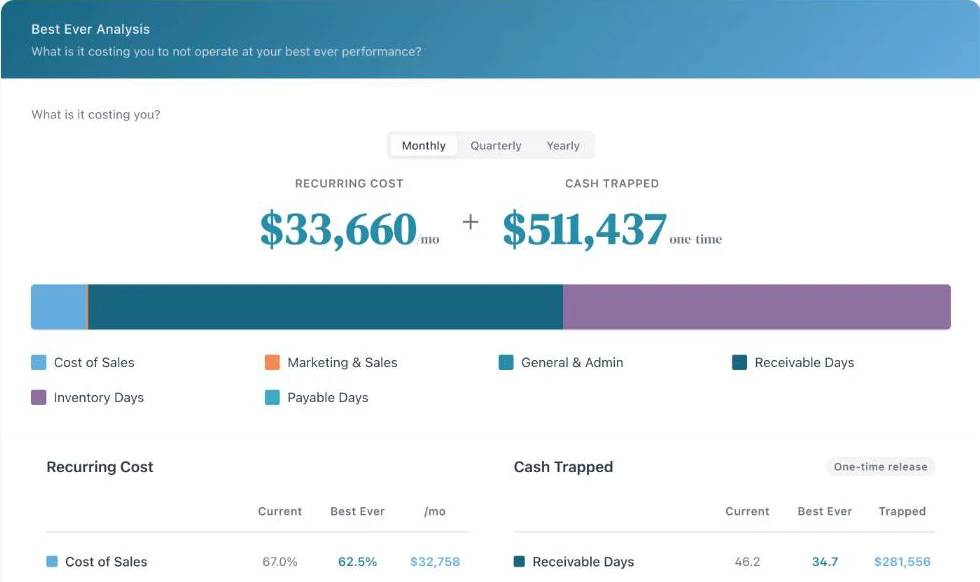
The Best Ever Analysis on the Overview puts a dollar figure on it. It compares how long customers take to pay, how long inventory sits, and how long you take to pay suppliers with your best month for each. It shows the total as Cash Trapped, one time. It uses the latest month’s figures, so its total can differ a little from a sum on a full year.
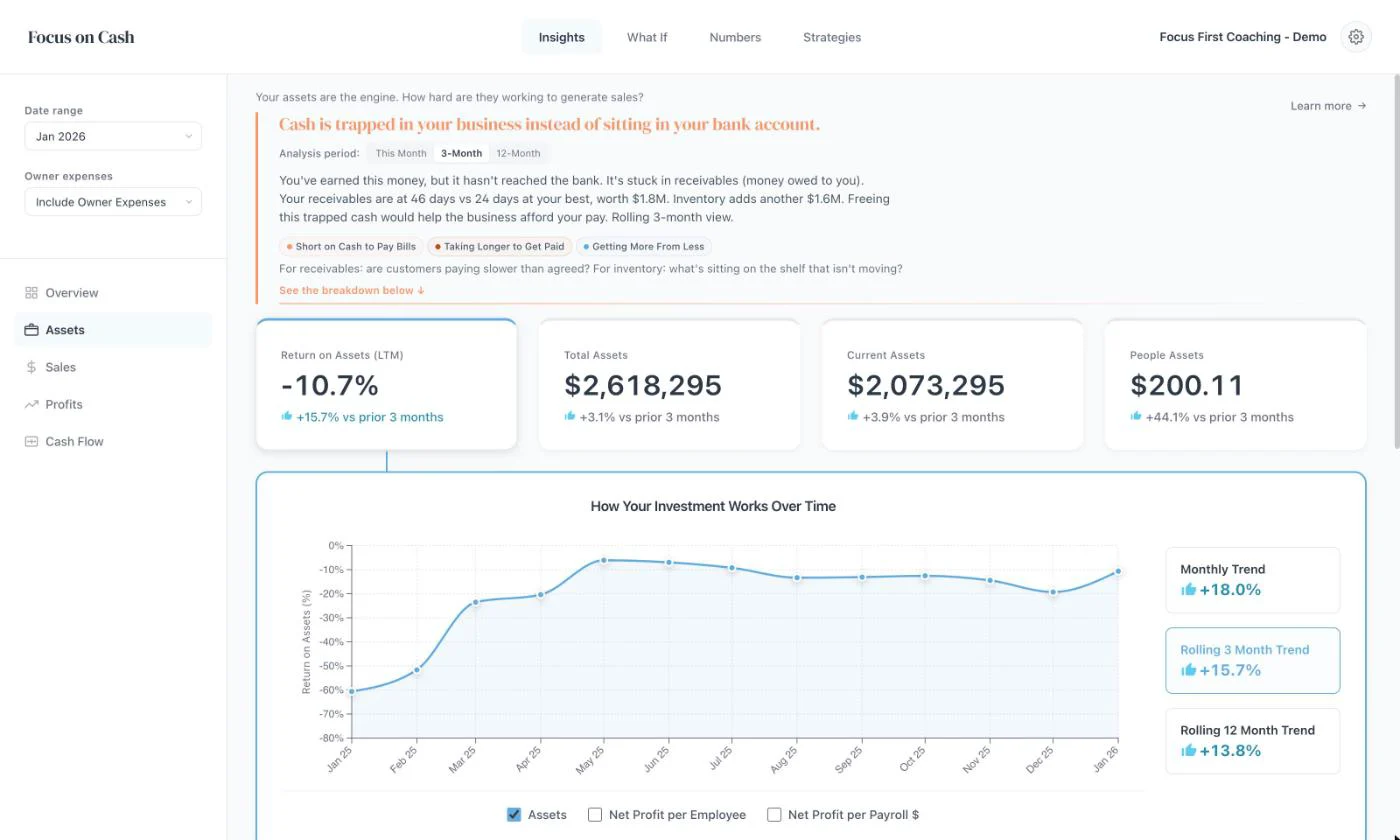
The Assets screen says in plain English when cash is trapped, and where: with customers, in inventory, or in paying suppliers sooner than you need to.
In the What If, set any of the 3 to your best ever and see what it does to cash. Try it on a demo company.
Related: Growing broke, when sales go up and the money goes down.
Get started
See your business clearly.
Fill out the form and we will be in touch with next steps. Every plan is billed once a year, with every feature included.
Or email [email protected]